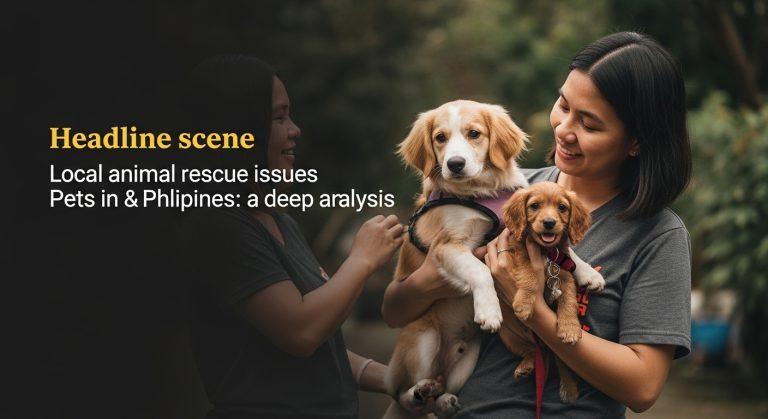
Filipino pets with owners in a cityscape, reflecting community welfare.
Updated: April 8, 2026
This week’s Pets Philippines analysis asks what the current currents in pet ownership reveal about households, shelters, and the businesses that rely on them, and how actors across the archipelago adapt to shifting demand and welfare needs.
Market dynamics shaping Philippine pet care
In urban and peri-urban centers across the Philippines, pet ownership has become a routine feature of daily life, not merely a lifestyle trend. Data from urban planning and market observers suggest households with smaller living spaces still maintain steady demand for compact companions, veterinary services, and reliable pet food options. The result is a market that blends affordability with growing interest in welfare—a sign that pet care is now embedded in everyday economic life rather than treated as a niche pursuit. Analysts trace three causal threads: household affordability, access to care, and information diffusion through digital platforms. When a family can obtain vaccines or microchips quickly, that reliability feeds trust and future investment in caring for a pet.
There is also a supply-side story: local manufacturers and distributors respond to currency shifts, transport costs, and seasonal demand, while online marketplaces expand options and transparency. This creates opportunities for efficiency but also raises expectations for service quality, price fairness, and after-sales support. For shelters and rescue groups, the signal is more nuanced: donors and adopters cluster around metropolitan hubs, yet rural areas face information gaps and limited access to care. The net effect is a dynamic reallocation of resources where humane standards, market incentives, and community trust must converge to sustain pet welfare.
Pet welfare and resilience amid climate and crisis
Climate events—typhoons, floods, heat stress—test the resilience of households and animal-welfare networks. When disaster disrupts routine care, the speed and reliability of care for pets become a measure of a community’s readiness. Evacuation centers, if they allow animals, require clear protocols for safe housing, clean water, and appropriate separation of species to reduce stress. In many cities, shelters operate with limited staff and depend on volunteers who juggle caregiving with other jobs. The best practice emerging from crisis response emphasizes pre-planned spaces that can house pets in humane conditions, scalable intake processes, and coordinated reunification efforts after the danger passes. Communities that already have a culture of mutual aid tend to recover more quickly because owners trust that their pets will be cared for during upheaval.
Moreover, disaster scenarios push shelters to adopt modular, scalable models: weatherproof storage, mobile veterinary teams, and cross-city transport networks. Some NGOs partner with local authorities to create pet-friendly micro-shelters in flood-prone areas, building a network that keeps animals with families whenever possible. The resilience logic is practical: reducing trauma to animals strengthens family stability and encourages responsible ownership in the long run.
Community action and shelter adaptations
Across the country, communities are layering voluntary labor, micro-donations, and outreach campaigns to close welfare gaps. Volunteer networks organize vaccination drives, spay/neuter clinics, and microchipping events on weekends, when many households are available. Social media campaigns extend the reach of adoption drives beyond neighborhood circles, expanding the pool of potential homes. Shelters that collaborate with schools, faith groups, and local businesses report better caregiver retention, improved standards, and more predictable funding streams. In practice, successful shelters integrate intake software, donor management, and proactive outreach to sustain a steady rhythm of rescue, care, and adoption. Beyond shelters, pet services—mobile clinics, affordable grooming, and community vaccination programs—help reduce barriers to care for owners who live far from urban centers.
The implication is clear: community-centered care paired with affordable access points creates a more reliable safety net for pets, even when public budgets are tight. When neighbors watch out for one another’s animals and share practical tips, the overall welfare ecosystem becomes more resilient to shocks and easier to sustain over time.
Policy signals and industry responses
Policy signals around animal welfare in the Philippines have historically lagged behind domestic care needs, but there is growing recognition that pets belong in the household economy, workplaces, and schools. Industry groups advocate humane standards, price transparency, and investments in preventive care such as vaccines, parasite control, and microchipping. The alignment between policymakers, veterinarians, shelters, and civil society matters because it accelerates the closing of welfare gaps and strengthens sector resilience to economic and climate shocks. When regulations encourage ethical treatment and equitable access to care, the welfare environment becomes more stable and predictable for families and for the professionals who serve them.
Looking ahead, the strongest signals point toward a blended policy approach: support for mobile clinics and community-based services, incentives for shelter collaboration, and clearer guidelines for safe, responsible adoptions. The challenge remains translating welfare improvements into affordable care for all corners of the archipelago, including rural barangays and remote neighborhoods where needs are acute but resources are scarce.
Actionable Takeaways
- Pet owners: maintain up-to-date identification, vaccination, and preventive care; invest in simple at-home welfare practices to reduce clinic visits during peak demand.
- Shelters and rescue groups: implement disaster-ready plans, scalable intake processes, and transparent donor reporting to build trust with communities.
- Local governments: integrate pet welfare into climate and disaster planning, ensuring evacuation centers accommodate animals and provide basic services.
- Pet businesses and NGOs: collaborate on low-cost access points for veterinary care, microchipping, and adoption campaigns to broaden reach beyond urban centers.
- Media and advocates: highlight responsible ownership, success stories of reunification, and practical guidance that helps families plan for pet care during crises.
- Community networks: cultivate neighborhood structures that monitor pet welfare and coordinate rapid assistance when needed.
Source Context
Context for this analysis includes international and regional reporting on pets, welfare, and crisis response gathered from diverse outlets.