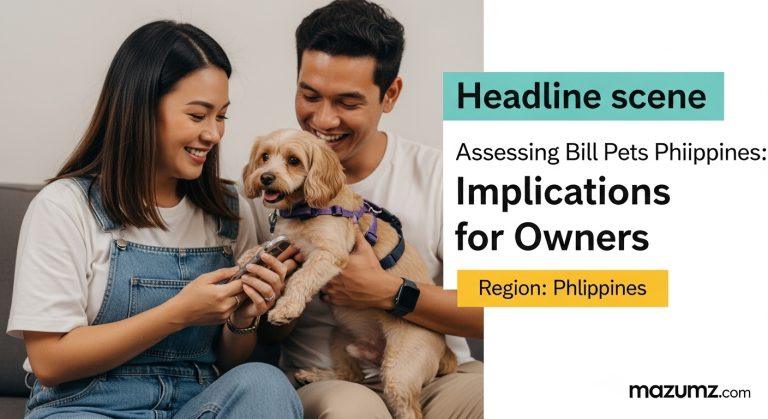
Urban Philippine neighborhood with pets and owners in a caring, community-focused setting.
Updated: April 8, 2026
Across the archipelago, the week’s Pets Philippines landscape reveals how Filipino households navigate care for pets. From bustling urban centers to rural barangays, the mix of adoption drives, veterinary access challenges, and community-led welfare programs signals a broader shift in how people value companion animals in daily life.
Context and signals from the Philippines’ pet scene
In major cities, pet ownership has become more embedded in family routines. Dogs remain the most common companions, yet cats and smaller domestic species are gaining visibility in apartments and suburban homes. The growth of local veterinary clinics, mobile clinics, and microchip initiatives points to a market that is increasingly structured around preventive care rather than crisis response. Adoption events hosted by shelters, rescue groups, and mindful retailers create pathways for households to acquire pets with support networks in place. At the same time, economic pressures and uneven infrastructure mean that care quality is not uniform, and many households still rely on informal networks for advice and assistance.
These dynamics matter because they hint at where policy and community funds might have the greatest leverage: places where veterinary access is expanding, and where trained volunteers can help sustain vaccination drives, spay-neuter programs, and responsible ownership education.
Challenges that shape weekly pet realities
Affordability remains a chronic constraint. Even with more clinics, the cost of vaccines, regular preventive products, and high-quality food can strain household budgets. In rural areas, shortages of veterinarians and medicines are common, while urban centers can face long wait times and crowded clinics. Stray populations pose separate welfare challenges and require coordinated efforts that combine humane management with community engagement. Education about responsible ownership and early disease detection is improving but uneven, and misinformation can spread easily online, complicating decisions for first-time pet owners.
Public health considerations also intersect with pet welfare: vaccination campaigns, parasite control, and microchipping contribute to safer communities but require sustained funding and organizational capacity. The upshot is that a steady cadence of low-cost services—pop-up clinics, subsidized spay-neuter, and accessible information—can markedly improve outcomes, but these services often hinge on volunteer networks and private philanthropy.
Policy, welfare, and community response
Across municipalities, NGOs, and private partners, there is growing experimentation with collaboration models that blend public responsibilities with civil-society energy. Local government units (LGUs) may pilot pet-friendly ordinances, support shelter infrastructure, and fund community outreach. Nonprofits often fill gaps in education, vaccination, and intake capacity, coordinating with veterinarians who donate time and expertise. The most durable improvements tend to emerge where these actors develop shared metrics—for example, vaccination coverage, rehoming rates, and return-to-owner success—so progress is trackable rather than episodic.
However, funding constraints, bureaucratic challenges, and competing public health priorities complicate execution. Where resources are limited, the best returns come from scalable, community-driven programs that empower residents to assist one another, rather than relying solely on centralized systems.
Actionable Takeaways
- Prioritize adopting pets from accredited shelters and rescue groups to reduce shelter overcrowding and support animals with immediate welfare needs.
- Invest in affordable preventive care—regular vaccines, parasite control, and microchipping—to improve long-term health outcomes for pets and peace of mind for owners.
- Encourage spay/neuter programs and accessible clinics to curb uncontrolled pet populations and reduce future welfare burdens.
- Support community-based networks, including volunteer-led vaccination drives and adoption events, that extend reach to underserved areas.
- Promote responsible ownership through public education, clear licensing where applicable, and collaboration with local governments and veterinary professionals.
Source Context
From an editorial perspective, separate confirmed facts from early speculation and revisit assumptions as new verified information appears.
Track official statements, compare independent outlets, and focus on what is confirmed versus what remains under investigation.
For practical decisions, evaluate near-term risk, likely scenarios, and timing before reacting to fast-moving headlines.
Use source quality checks: publication reputation, named attribution, publication time, and consistency across multiple reports.
Cross-check key numbers, proper names, and dates before drawing conclusions; early reporting can shift as agencies, teams, or companies release fuller context.