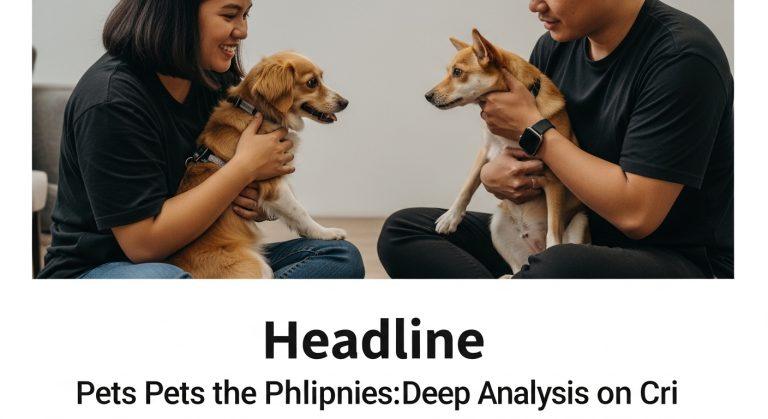
In the Philippines, more Pets Philippines is not merely a trend but a test of how communities organize around animal welfare, ownership responsibility, and local ecosystems of care. This deep-dive analyzes how shelters, local governments, veterinary networks, and ordinary guardians intersect to shape a humane environment for companion animals and a safer, more compassionate urban life.
Understanding the adoption landscape in the Philippines
Across Luzon, Visayas, and Mindanao, shelters and rescue groups operate with varying levels of resources. Adoption remains the preferred pathway for many households, yet barriers persist: housing restrictions, work schedules, and the stigma that sometimes attends animals from shelters. The rise of rescue networks and fostering has begun to shift the equation, turning crowded cages into homes through weekend drives and online campaigns that connect caretakers with prospective families. In many communities, barangay volunteers, local clinics, and nonprofit groups collaborate to host adoptions, vaccination clinics, and microchipping events, creating a more reliable pipeline from shelter to home.
Beyond big-city hubs, the uneven spread of veterinary services creates a two-tier system: urban adopters may access affordable spay/neuter programs and post-adoption support, while rural areas rely on traveling clinics and partner organizations. This divergence matters because it influences decisions about whether to surrender a pet during a housing transition, financial hardship, or health concern. The practical upshot is that more Pets Philippines depends not just on what happens inside shelters but on how well communities can mobilize resources to keep pets safe, vaccinated, and connected to families that will keep them long term.
Shelter capacity, funding, and volunteer networks
Shelter capacity varies dramatically by geography. In metropolitan centers, shelters and NGOs report high demand for intake space, medical care, and behavioral assessments, even as donor streams support vaccination drives and outreach. In smaller towns, capacity may be tighter, but robust volunteer networks and fostering programs can relieve pressure and improve outcomes for animals with longer stays. A common thread across contexts is that fostering not only reduces crowding but also improves the likelihood that animals are placed with suitable families who understand their needs and histories.
Funding cycles influence everything from basic food and bedding to veterinary care and behavioral enrichment. When donors prioritize preventive health—vaccinations, parasite control, and spay/neuter campaigns—shelters can reduce long-run costs associated with medical emergencies and disease outbreaks. Conversely, funding gaps tend to slow down intake, limit intake screening, and complicate rehoming efforts. Volunteer engagement, training, and clear protocols are essential to ensure that foster homes, reception areas, and adoption events operate smoothly and ethically.
Policy, education, and community partnerships
National legal frameworks provide a baseline for animal welfare, but implementation hinges on local leadership, community buy-in, and ongoing education. The Philippines’ Animal Welfare Act and related regulations establish prohibitions on cruelty and set expectations for humane treatment, yet enforcement often depends on barangay-level enforcement, humane societies, and veterinary networks working in tandem with law enforcement and local government units. Education campaigns aimed at students, renters, and prospective pet owners help build a foundation of responsible ownership—covering topics from vaccination and microchipping to humane training and consent within households. Community partnerships with schools, clinics, and corporate sponsors can fund spay/neuter drives, subsidize vaccines, and expand access to medical care, ultimately strengthening the ecosystem that supports more Pets Philippines.
Additionally, public health considerations—such as vaccination coverage and parasite control—are deeply linked to pet welfare. Strong collaborations between animal welfare groups and public health programs can align outreach efforts, ensuring that pets contribute positively to family life while reducing zoonotic risks in dense urban environments. Policy dialogue that centers on practical barriers—transport, cost, and access to care—can yield actionable solutions that communities can sustain over time rather than one-off campaigns that fade away after a drive ends.
Innovations in care: fostering, microchipping, and digital campaigns
Innovation in care tends to emerge where communities connect people with pets more efficiently. Foster-to-adopt models, when supported by clear guidelines and background checks, have shown promise in decanting shelter populations while ensuring animals experience home life before permanent commitments. Microchipping, paired with centralized registries and accessible public clinics, helps reunite separated families and reduces the risk of animal loss in urban centers. Digital campaigns—photos, videos, and live-stream events—enable shelters to reach far-flung communities, enabling more informed decisions and timely adoptions even when in-person access is limited.
Moreover, technology is enabling cross-island collaboration. Regional networks of volunteers, veterinary teams, and rescue groups share resources, training, and best practices, which helps maintain consistent standards of care. The net effect is a more cohesive system where a dog or cat rescued in one province can find a safe foster home or adoption option across a nearby city, increasing the probability of a successful long-term placement. In this framing, more Pets Philippines becomes a national aspiration facilitated by local action, not a distant ideal.
Actionable Takeaways
- Adopters: research a pet’s needs, meet animals in a calm setting, and consider fostering as a transitional step before permanent adoption.
- Shelters and rescues: expand volunteer training, establish predictable adoption events, and partner with local clinics for affordable vaccines and care.
- Policy and government: support funding for shelters, streamline licensing and microchip registries, and enforce anti-cruelty laws at the barangay level.
- Communities: promote responsible ownership through schools and neighborhood groups, including spay/neuter and post-adoption support programs.
- Media and platforms: showcase successful adoptions, share care resources, and develop centralized online portals to match homes with pets across regions.
- Technology: invest in affordable microchip programs and data-sharing among shelters to reduce misplacement and improve reunification rates.